

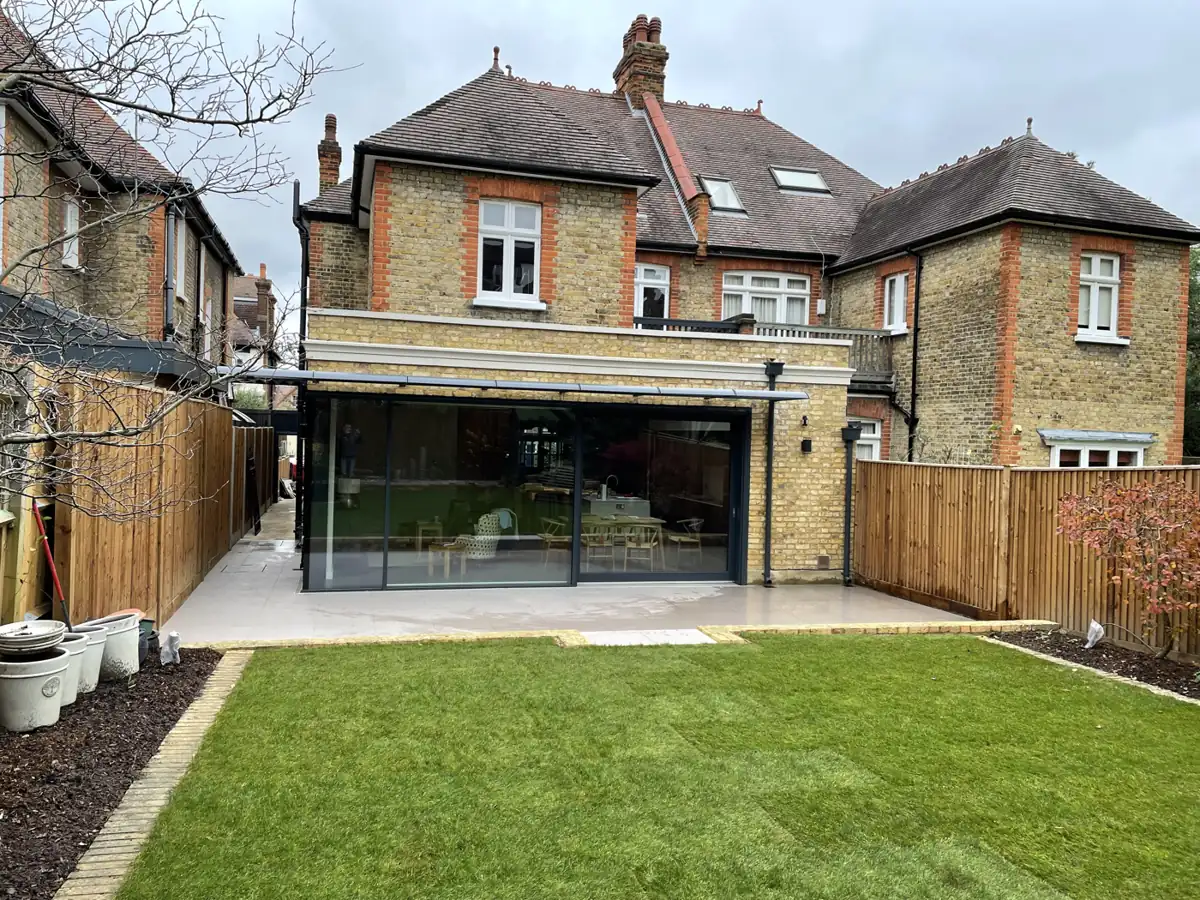
The Party Wall etc. Act 1996 says that before certain building work near a shared wall or boundary, you must serve written notice on your neighbours. Give at least two months’ notice for work to a party wall (for example inserting steel for a loft conversion), and at least one month for a new wall on the boundary line or for excavations within 3 or 6 metres of a neighbour’s building. Neighbours have 14 days to respond. If they consent in writing, no surveyor is needed. If they dissent or do not reply, surveyors agree a Party Wall Award, usually paid for by the person doing the work.

Most extensions and loft conversions on terraced and semi-detached houses in south-west London trigger the Act. Planning it early avoids delays to your start date.
Key takeaways
- The Act applies in England and Wales, whether or not you need planning permission.
- Three types of work need notice: work to a party structure, a new wall at the boundary, and nearby excavation.
- Notice periods are one or two months, and a notice is valid for one year.
- Silence from a neighbour on party structure or excavation notices counts as a dispute, which starts the surveyor process.
- The building owner normally pays both surveyors where the work is only for their benefit.
01What is a party wall?
A party wall is a wall shared by two properties, such as the wall between terraced or semi-detached houses. It also includes a garden wall built astride the boundary. A “party structure” can also be a floor between flats.
02What work needs a party wall notice?
| Type of work | Section of the Act | Minimum notice | Typical example |
|---|---|---|---|
| Work to an existing party wall or structure | Section 2 | 2 months | Cutting in steel beams for a loft conversion, raising the party wall for a dormer, removing a chimney breast attached to the party wall, underpinning |
| Building a new wall on or at the boundary line | Section 1 | 1 month | A side return or rear extension built up to the boundary |
| Excavating near a neighbour’s building | Section 6 | 1 month | Foundations for an extension within 3 m or 6 m of next door |
Swipe the table sideways to see every column.
The 3 metre and 6 metre rules
- 3 metres: you must give notice if you excavate within 3 metres of a neighbour’s building and your excavation goes deeper than the bottom of their foundations.
- 6 metres: you must give notice if you excavate within 6 metres of their building and your excavation would cut a line drawn downwards at 45 degrees from the bottom of their foundations.
The notice must say whether you propose to strengthen or safeguard the neighbour’s foundations, and include plans and sections.
03How does the party wall process work?
- Serve notice. Write to every adjoining owner (including freeholders and long leaseholders) with the correct notice, plans where needed, and the planned start. Notices can be sent electronically if the neighbour has agreed to that.
- The neighbour has 14 days to respond in writing.
- If they consent, you can start once the notice period ends. A photographic record of the neighbour’s property before work starts is still sensible.
- If they dissent, or do not respond to a section 2 or section 6 notice, a dispute is deemed to have arisen.
- Surveyors are appointed. Either one “agreed surveyor” acts for both owners, or each owner appoints their own and the two surveyors select a third if needed.
- The Party Wall Award sets out what work will be done, how and when, and records the condition of the neighbour’s property. Work proceeds in line with the Award.
If a neighbour does not respond to a section 1 notice for a new boundary wall, the wall must be built wholly on your own land, at your expense.
04Who pays for party wall surveyors?
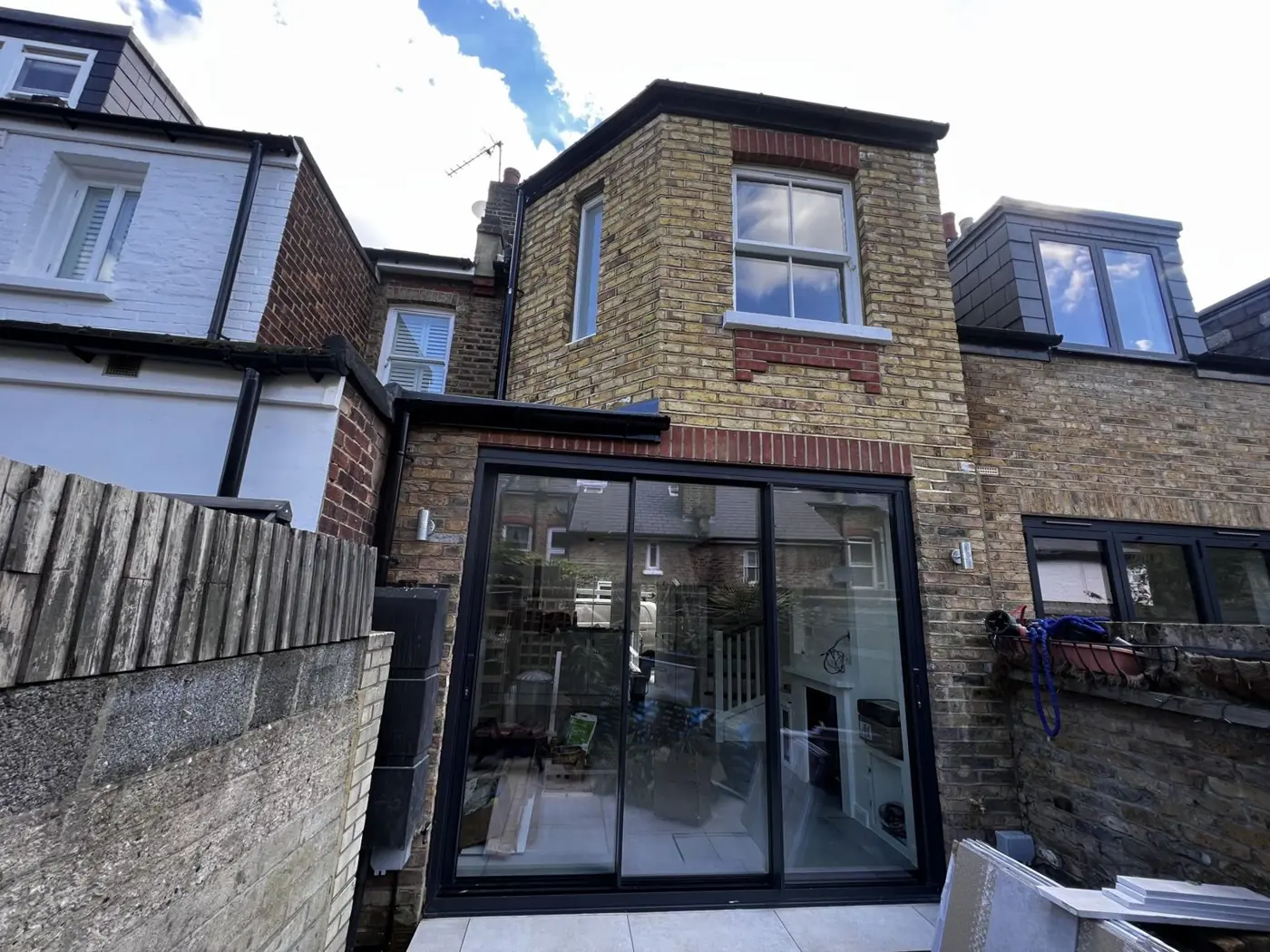
Usually the building owner (the person doing the work) pays all surveyors’ fees, including the neighbour’s surveyor, when the work is solely for their benefit. Costs can be shared where the work is needed because of a defect or disrepair. The surveyors decide who pays in the Award.
Budget tip: build party wall costs into your project budget from the start. Our house extension cost guide lists them with the other fees outside the build price.
05How long does it take?
Allow at least two months for party structure notices and one month for boundary and excavation notices, from serving notice to starting that work. If surveyors are needed, the Award can take longer to agree. Serving notice early, alongside the design and approvals stage, keeps the build date on track. A notice is valid for one year, so do not serve it too early.
06When is a party wall notice usually needed in south-west London?
| Project | Usually triggers the Act? |
|---|---|
| Rear dormer loft conversion on a terraced or semi-detached house | Yes, steel bearing into or raising the party wall |
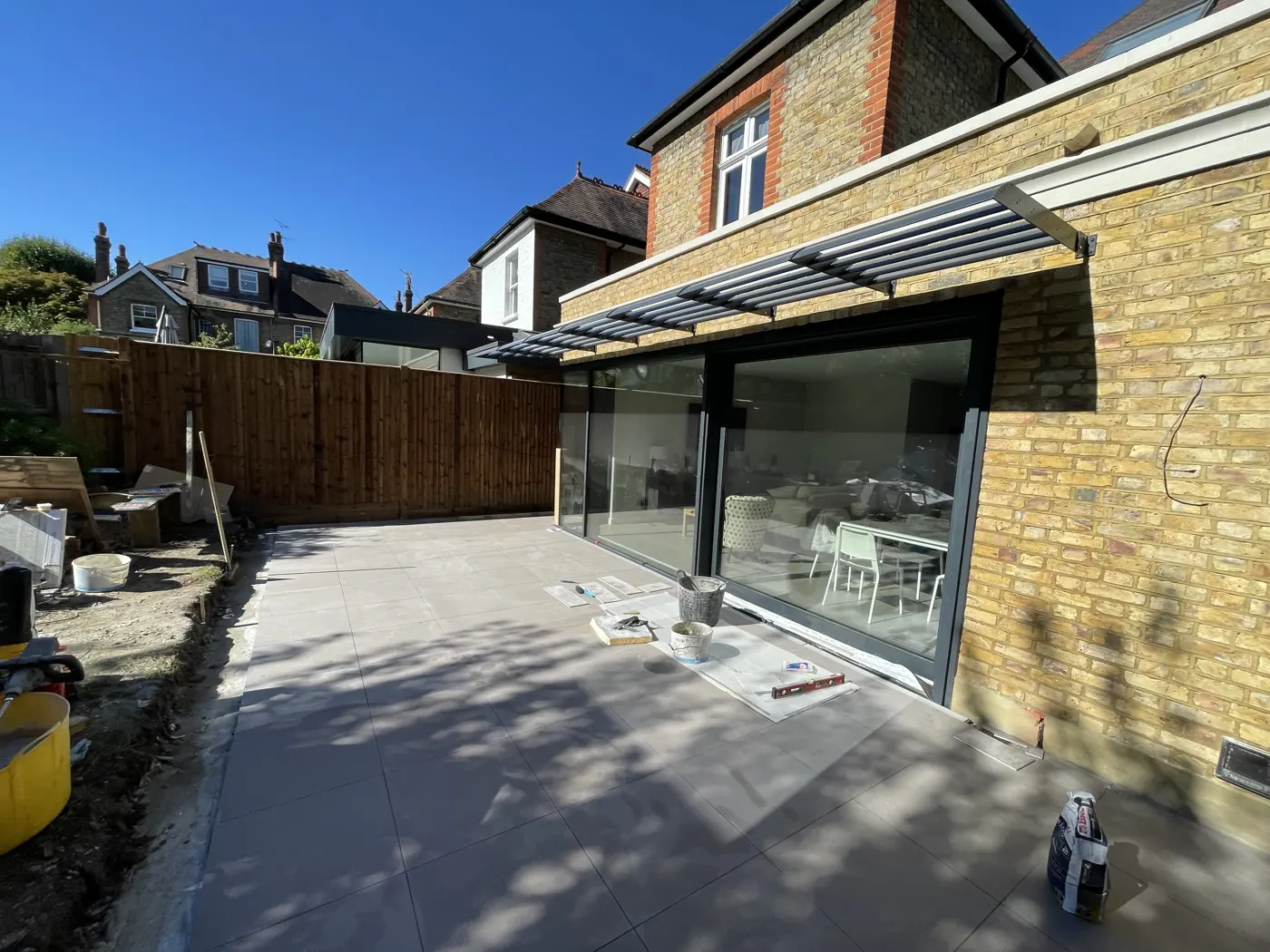
| Side return extension on a Victorian terrace | Usually, new wall at or near the boundary and excavation |
| Single-storey rear extension on a semi, built off the boundary | Often, for excavation within 3 m |
| Detached house extension well away from neighbours | Often not |
| Internal renovation not touching a shared wall | No |
| Kitchen or bathroom refit | Only if cutting into the party wall |
Swipe the table sideways to see every column.
07Does the Party Wall Act replace planning permission?
No. The Act is separate from planning permission and building regulations. A neighbour cannot use it to stop an extension, but it gives them a say in how the work near their property is done and protects them against damage. For planning rules, see our council-by-council planning guide.
08How to keep neighbours on side
- Talk to them before notices arrive. Show them the drawings and explain the programme.
- Share contact details for the site manager.
- Agree working hours, deliveries and parking, especially on narrow streets in Fulham, Putney and Clapham.
- Offer a schedule of condition even if they consent, so both sides have a record.
At Prohaus, attention to parking, noise and neighbours is part of how every project runs. See how we work in Fulham, Clapham, Putney and Kingston.
09Frequently asked questions
Do I need a party wall agreement for a loft conversion?
On terraced and semi-detached houses, usually yes, because steel beams normally bear into the party wall, which is work under section 2. That needs at least two months’ notice.
Can I serve a party wall notice myself?
Yes. The government publishes example notice letters. Many homeowners use a surveyor to make sure the notice is correct, because an invalid notice can delay the work.
What happens if my neighbour ignores the notice?
For party structure and excavation notices, no reply within 14 days means a dispute is deemed to have arisen, and surveyors must be appointed. If the neighbour still does not appoint a surveyor, one can be appointed on their behalf under the Act.
Can my neighbour stop my extension under the Party Wall Act?
No. The Act controls how the work is carried out and protects the neighbour’s property. It does not decide whether the extension can be built.
Does the Act apply if I have planning permission?
Yes. Planning permission and the Party Wall Act are separate. You may need both.
+Keep reading
Services and areas mentioned in this guide:
About Prohaus
Prohaus Ltd is a building company based in Kingston upon Thames, registered in 2015 and built on more than 20 years of residential building experience. We build extensions, loft conversions and renovations across Kingston, Surbiton, Richmond, Barnes, Putney, Fulham, Chelsea, Clapham and Wimbledon. Every project runs under a written contract with a 1-year guarantee.
Planning an extension or loft?
Prohaus plans party wall timing alongside design, approvals and ordering, so notices do not hold up your start date.

