

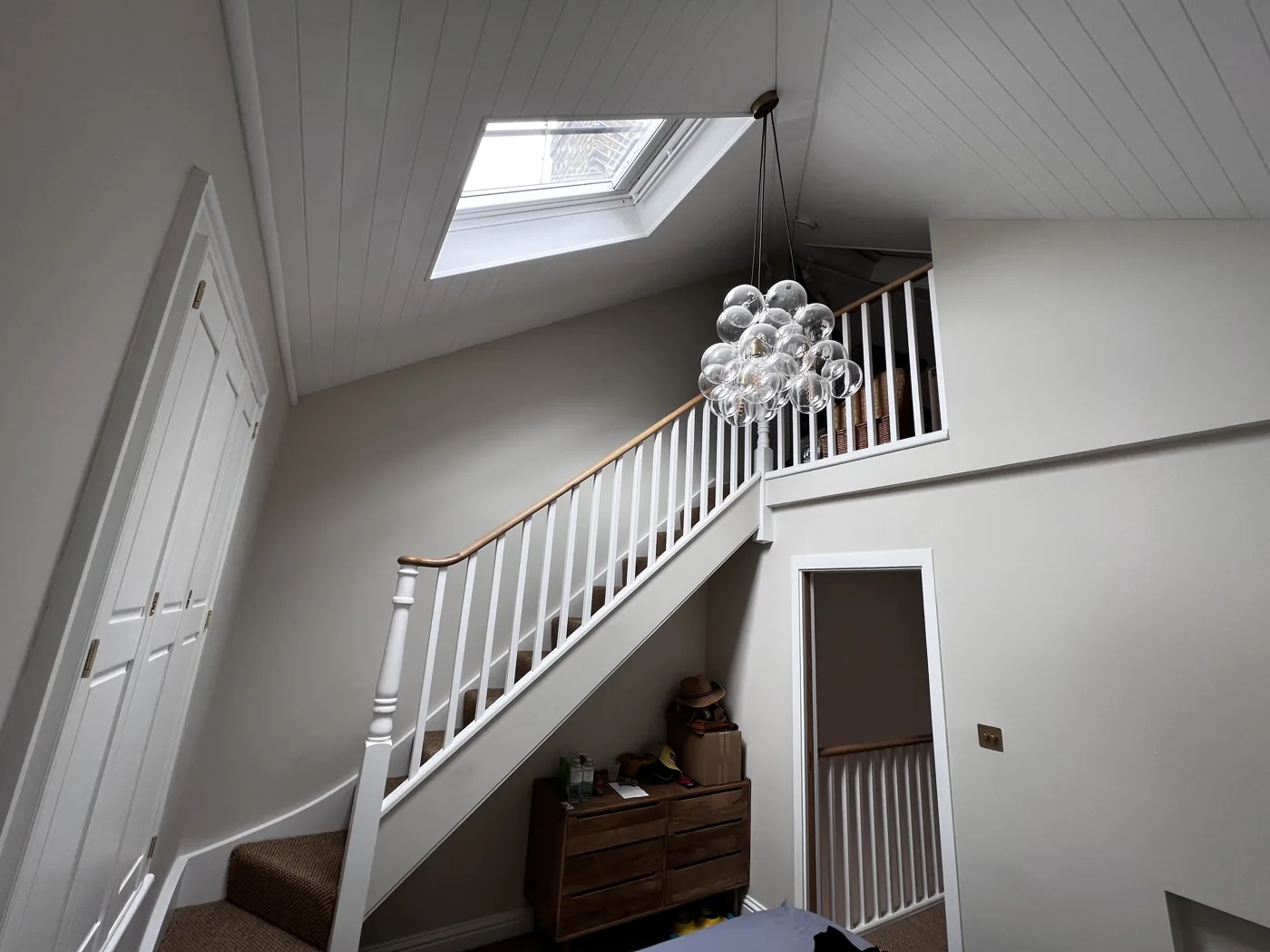
Rooflights are the most effective way to bring daylight into the middle of a deep extension or side return, because light from above reaches further than light from a wall. Flat rooflights suit flat roofs and give clean lines, roof lanterns add height and a traditional look, pitched roof windows suit sloping roofs and vaulted ceilings, and a glazed roof or glass strip works well over a side return. Plan for solar gain, condensation and drainage, and choose high-performance glass. Rooflights in extensions are covered by the extension’s building regulations approval.

Key takeaways
- One well-placed rooflight over the dining table or island can transform a dark ground floor.
- Too much overhead glass can overheat in summer. Solar control glass and opening vents help.
- Condensation is controlled by good glass, a thermally broken frame and ventilation.
- Rooflights must be detailed with the roof build-up and drainage, not added later.
- On existing roofs, rooflights are often permitted development if they project no more than 150 mm.
01Types of rooflight
| Type | What it is | Best for |
|---|---|---|
| Flat rooflight (fixed) | Low-profile glazing on a flat roof upstand | Contemporary rear extensions |
| Opening flat rooflight | Same, with electric opening for ventilation | Kitchens, summer cooling |
| Roof lantern | Pyramid or hipped glazed structure | Traditional look, extra height |
| Pitched roof window | Window set into a sloping roof | Vaulted ceilings, lofts |
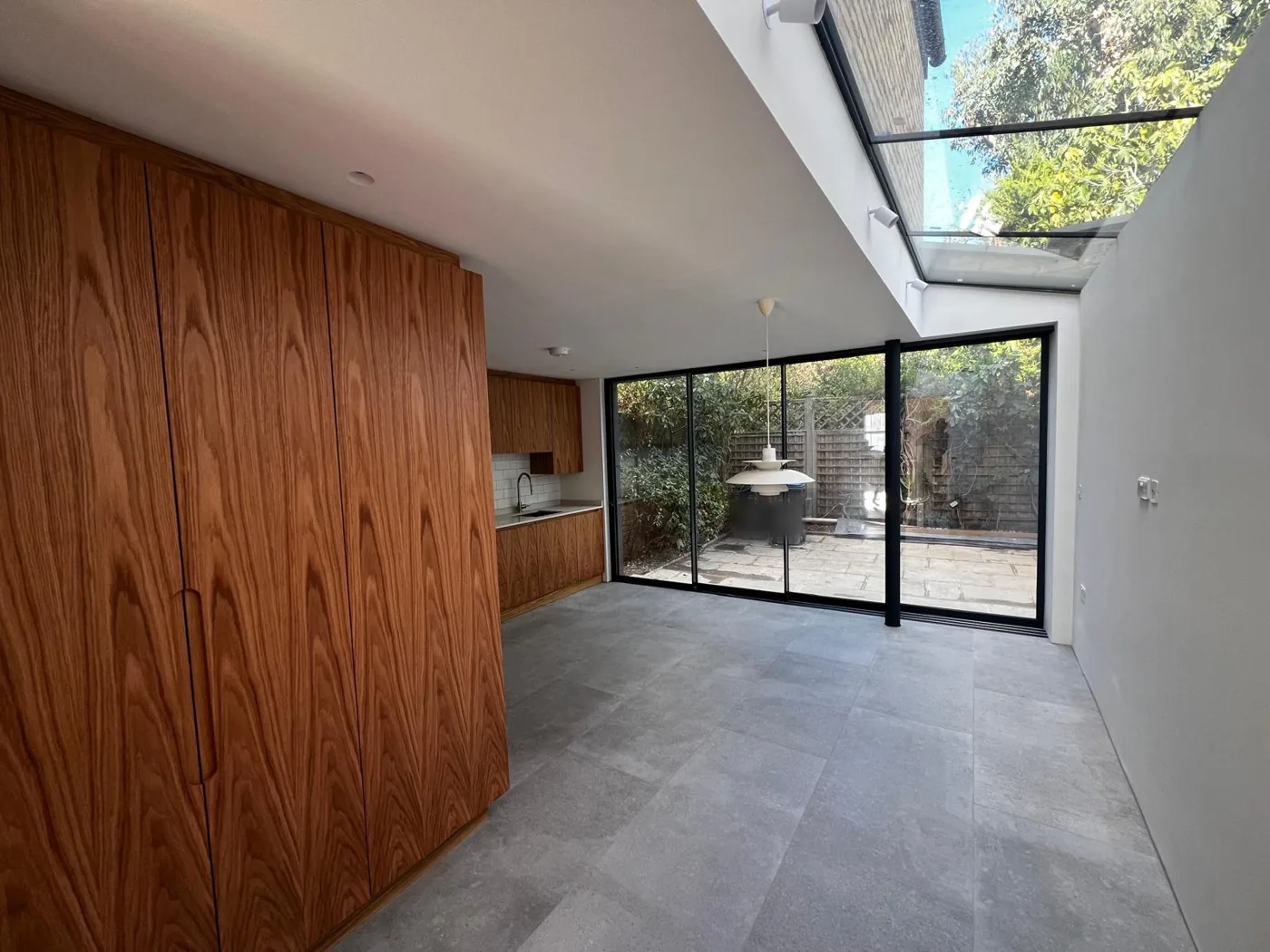
| Glazed side return roof | Glass panels spanning the side return | Narrow side return extensions |
| Glass strip along a wall | Narrow glazing at the junction with the party or house wall | Washing a wall with light |
Swipe the table sideways to see every column.
02Where to put rooflights
- Over the deepest part of the plan, usually where the old house meets the extension.
- Above the dining table or island, to create a bright centre.
- Along the party wall in a side return extension, to light the full depth.
- Over the stair in a loft conversion.
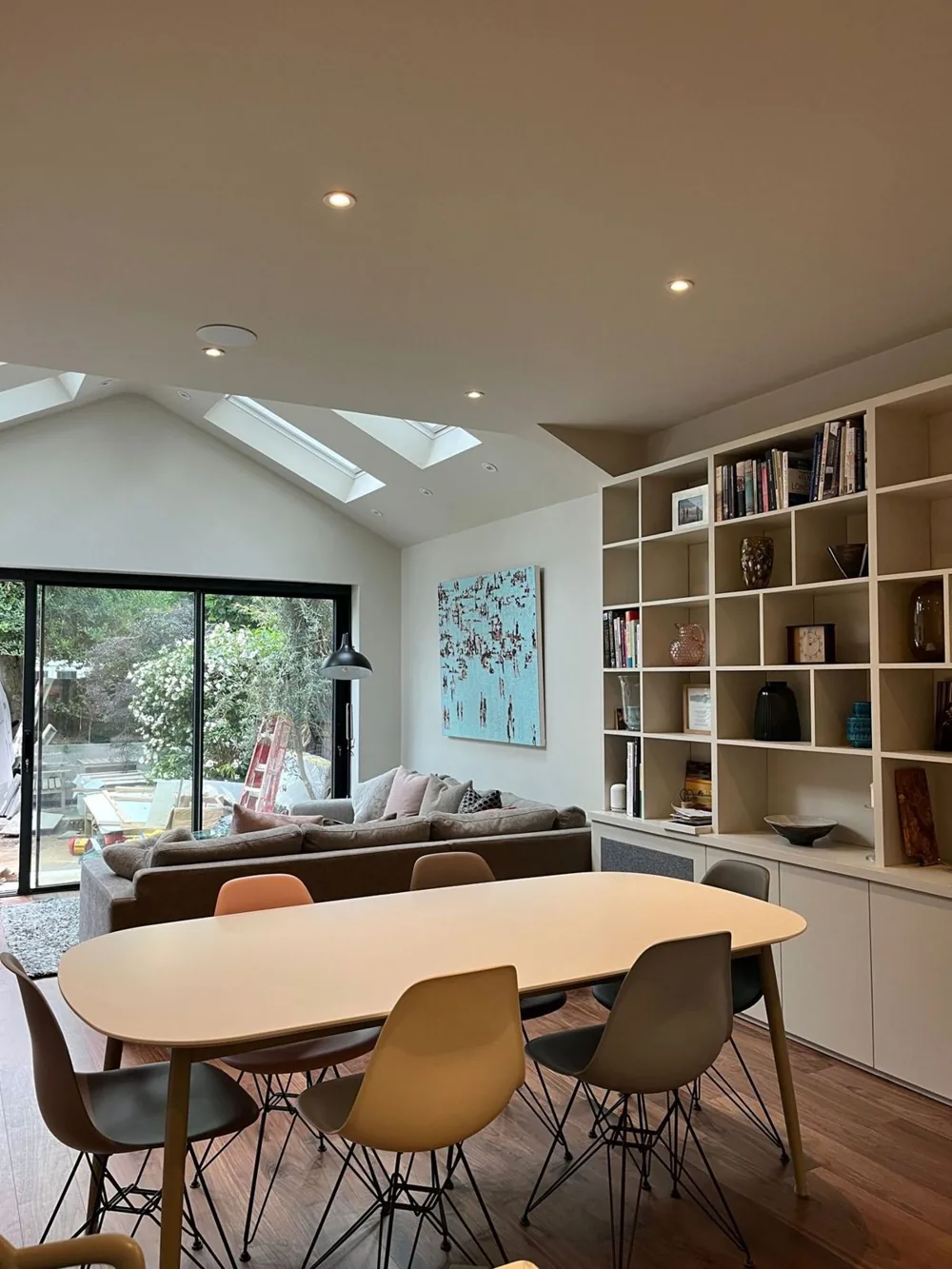
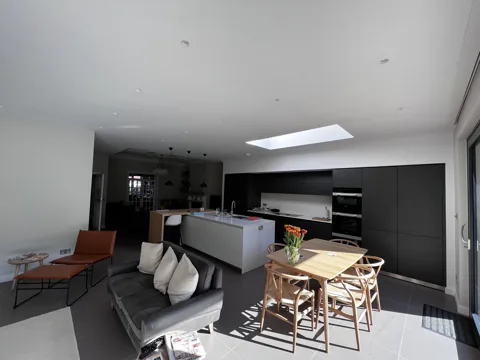
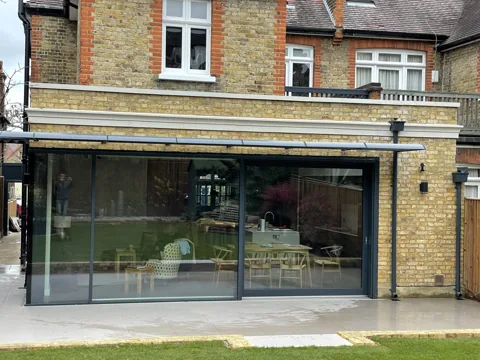
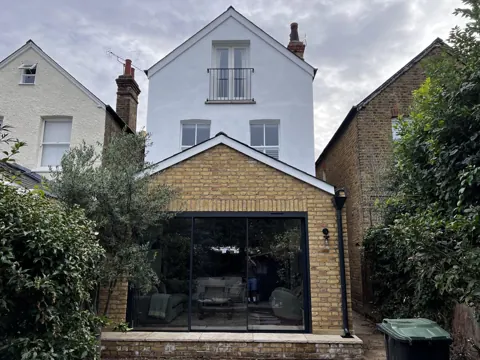
Our Barnfield Avenue extension in Kingston has an open-plan kitchen and dining room lit by rooflights, and our Staunton Road extension combines a vaulted ceiling with rooflights. See our house extensions page.
03Managing heat, glare and condensation
- Solar control glass reduces summer heat gain, especially on south-facing roofs.
- Opening rooflights let warm air escape and allow purge ventilation.
- Blinds designed for rooflights cut glare.
- Thermally broken frames and good glass reduce heat loss and condensation in winter.
- Background ventilation and kitchen extraction remove moisture.
04Building regulations
Glazing in an extension is part of the extension’s building regulations approval. Building control looks at:
- thermal performance of the glazing and frames;
- safety glazing suitable for overhead use;
- structural support for the upstand and any glass roof;
- energy calculations, because large areas of glazing affect the extension’s overall performance.
05Planning: adding rooflights to an existing roof
Under permitted development, rooflights in an existing roof are usually allowed if they:
- project no more than 150 mm beyond the roof slope;
- are no higher than the highest part of the roof;
- on side elevations, are obscure-glazed and non-opening unless more than 1.7 m above the floor.
In conservation areas and on Article 4 streets, front rooflights may need permission. See our conservation area guide. For rooflights in a new extension, they form part of the extension design and its planning route.
06Detailing that prevents leaks
- A proper upstand at the right height above the finished roof.
- Roof falls that take water away from the rooflight.
- Correct flashings and membranes.
- Gutters and outlets sized for the glazed area.
This is why glazing is coordinated with the build rather than fitted afterwards. Prohaus supplies and installs aluminium doors, windows and architectural glass as part of the project.
07Frequently asked questions
Do rooflights make a room too hot?
Large unshaded rooflights on a south-facing roof can. Solar control glass, opening vents and blinds help keep the room comfortable.
Is a roof lantern better than a flat rooflight?
A lantern gives height and a traditional look. A flat rooflight is more minimal and lets in light more evenly. Both work. It depends on the style of the extension.
Do rooflights leak?
Well-detailed, correctly installed rooflights should not. Most leaks come from poor upstands, flashings or roof falls.
Can I add a rooflight without planning permission?
Often yes, on an existing roof, if it projects no more than 150 mm and meets the other conditions. Check conservation and Article 4 controls.
+Keep reading
Services and areas mentioned in this guide:
About Prohaus
Prohaus Ltd is a building company based in Kingston upon Thames, registered in 2015 and built on more than 20 years of residential building experience. We carry out extensions, loft conversions, renovations, new builds, kitchens and bathrooms, glazing, bespoke joinery and garden offices across Kingston, Surbiton, Richmond, Barnes, Putney, Fulham, Chelsea, Clapham and Wimbledon. Every project runs under a written contract with a 1-year guarantee.
Talk to us about light in your extension
Send photos and drawings of the space. We will look at where light is needed and include the glazing in a written, itemised quotation.

